

In Memoriam
A Celebration of the Life and Career of James R. McCredie
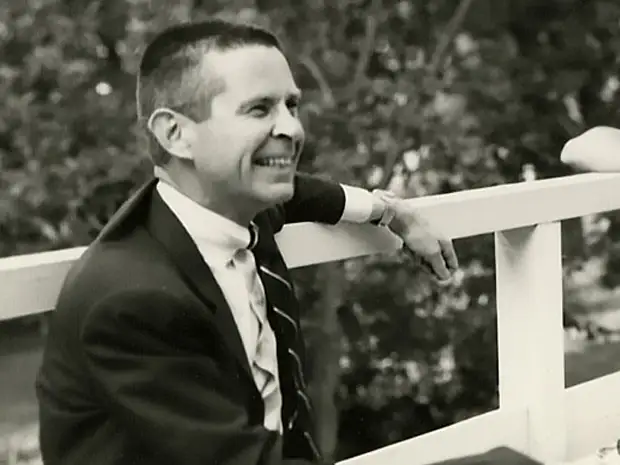
Clemente Marconi
James R. McCredie Professor in the History of Greek Art and Archaeology
,
The Institute of Fine Arts, New York University
I came to know Jim McCredie through some of his most celebrated publications: his
books and articles on Samothrace, including the magnificent volume on the rotunda of
Arsinoe (1992), which stands as the definitive treatment of one of the masterpieces
of Greek architecture and offers a model of both in-depth analysis of an ancient
building and international collaboration. And his seminal essays which I regularly
include among the readings for my seminars on Greek urbanism and architecture: the
one on Hippodamos (1971) in which, analyzing the evidence for the city plans of the
Milesian, Jim argued that the essence of his planning was not the grid itself but a
complex system derived from geometrical and political principles and carefully
fitted to the demands of function and site; or the other influential essay on the
architects of the Parthenon (1979), in which Jim suggested a close collaboration and
strategic division of labor between Iktinos, the author of the design of the
building, and Kallikrates, responsible for its construction.
The first time I met Jim in person and we had a conversation was after I was offered
the position of Professor of Greek Art and Archaeology here at the Institute. At the
time, Jim’s office was next door, at number three, in the room at the back
where he had his desk with the computer, from which as usual he would reply to
one’s emails immediately. Hanging on the wall behind Jim was an aerial
photograph of Samothrace and not coincidentally much of the conversation we had on
that occasion was about the Sanctuary of the Great Gods, and the fact that Jim would
have welcomed my involvement with the study of the site. And there he was, the next
summer, waiting for me and Rosalia at the harbor of Kamariotissa, next to his car
Sylvester and with his impeccable outfit of field archaeologist, including his
legendary pit helmet.
That summer marked the end of my first year of teaching at the Institute, in which I got to know Jim—who had already reached emeritus status—as a colleague and as a teacher. Much has been said and will be said today about Jim’s prodigious career as a field archaeologist, his directorship of the Institute, and his legendary record of service to the American School, as director, chair of the Managing Committee, and President and member of the Board of Trustees. For my part, however, I would like to highlight another aspect of Jim’s personality, namely his dedication to teaching that came together with a staunch support of the Ancient field.
As for teaching, the obvious place to start is the fact that over the years, including after official retirement, Jim served as committee member for a remarkable number of dissertation defenses, on subjects ranging from Ancient to Contemporary Art. Likewise, for many years Jim was in charge of the part of the oral exams that concerned not only Greek architecture, but also Greek History and Greek Epigraphy, two fields in which he mentored generations of IFA students. Also, from our monthly conversations around faculty meetings it was clear how Jim was always particularly interested in the intellectual progress of our students in Ancient, rejoicing after reading papers which he had found excellent or expressing concern for expectations that were not met yet. Indeed, Jim held all our students to the highest academic standards. But at the same time he had a consistent sensitivity to their needs and feelings.
Last but not least, I will mention Jim’s staunch support of the Ancient field here at the Institute. I can definitely speak about his generosity in supporting the Seminar of Greek and Roman Art and Architecture, but the same can be said of his many initiatives in favor of the study of Ancient Art and Archaeology over the years. Simply put, without his good judgment, and the benefit of his modest, persistent, and steady hand as director and professor, the program in Ancient at the Institute would not have the international reputation it has today, with excellent applicants every year to both our MA and PhD programs. This is one of the many reasons we are celebrating today Jim McCredie’s life and career.