

Public Programs @ The Institute
Series: Conversations in Modern European Art
Workshop on Sculpture and Becoming
Speakers: Juliet Bellow, Program Director and Professor of Art History, American University, Joanna Fiduccia, Assistant Professor of the History of Art, Yale University, Meredith Gamer, Associate Professor of Art History and Archaeology, Columbia University, Carolina Mangone, Associate Professor of Art and Archaeology; Director, Program in Italian Studies, Princeton University, Elyse Nelson, Associate Curator of European Sculpture and Decorative Arts, The Metropolitan Museum of Art
Friday, October 9, 2026, 10am-4pm
Space is Limited. Interested attendees please email: eb4635@nyu.edu.
Schedule
10:00 – 10:15 AM Welcome and Introductory Remarks
Emmelyn Butterfield-Rosen, Professor, Institute of Fine Arts, New York University
Ara H. Merjian, Professor of Italian Studies, New York University
10:15 – 11:15 AM
Carolina Mangone, “Non-finito and Formlessness in Early Modern Stone Sculpture”
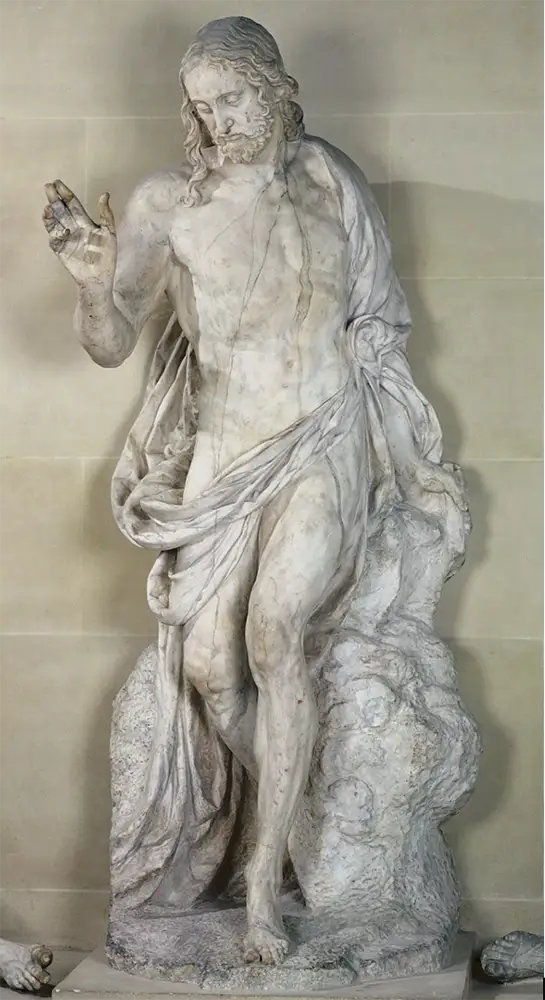
Well before Rodin modernized sculpture by transforming Michelangelo’s non-finito into a deliberate aesthetic, a handful of early modern imitators experimented with how to adopt unfinishedness as a formal language in stone sculpture without contravening norms of finish. My paper focuses on this overlooked period in the reception of Michelangelo’s roughly hewn statues. Although the instances of emulation are few, intermittent, and ad hoc, I argue that works by Niccolò Tribolo, Giambologna, Germain Pilon, and Gianlorenzo Bernini attest to a persistent, underlying conception of unfinishedness as the means to represent things that defied fixed form or that had chaotic and accidental shape. Was the non-finito thus already legible to some as a novel aesthetic, if not quite a proper category of sculpture, in its own right?
Image: Germain Pilon, The Resurrection of Christ, 1572–1590. Marble, from the Valois Chapel, Saint-Denis. Musée du Louvre, Paris (inv. MR 1592).
11:15 – 11:30 AM
Break
11:30 AM – 12:30 PM
Joanna Fiduccia, “Matter Without a Master”
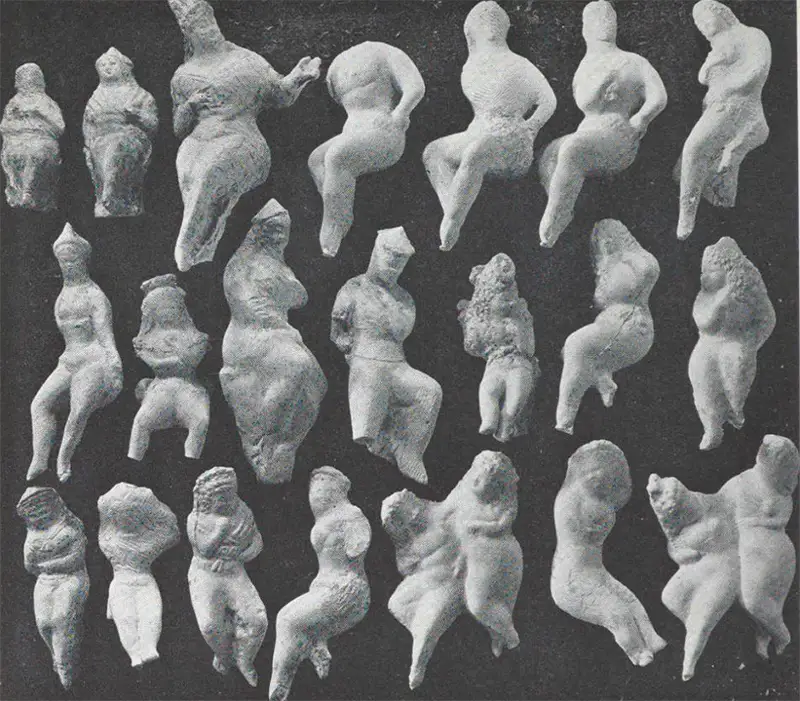
This paper examines the shared interest of artists working in plaster in the 1930s and 40s—Paule Vézelay, Alberto Giacometti, and Elie Nadelman—in the technics of the mold: registration keys, piece-mold seams, and sprues, which increasingly become central motifs in their sculpture. These elements mark an interest in plaster as a material that discloses phases of the casting process in which the artist’s hand has no part. Gilbert Simondon’s theory of individuation, wherein the becoming of a being results from the unfolding of phases within a metastable system of form and matter, offers one account of this attraction to plaster. Yet the sculptor’s retreat admits a different reading as well, where that withdrawal is not fidelity to process but its inversion, reenacting the automatisms that the historical materialist sets at the origin of the modern object and subject alike. I suggest that these sculptors do not choose between these accounts; rather, they stage the mold, exhibit its artifacts and remainders, in order to make the object’s estrangement from its maker not a truth to be inferred but a process to be seen.
Image: Elie Nadelman, Group of plaster figurines, c. 1944, from Lincoln Kirstein, The Sculpture of Elie Nadelman (New York: Museum of Modern Art, 1948), p. 54.
12:30 – 1:30 PM
Break
1:30 – 2:30 PM
Meredith Gamer, “Cut, Carve, Fold, Fill: William Hunter’s Sculptural Dissections”
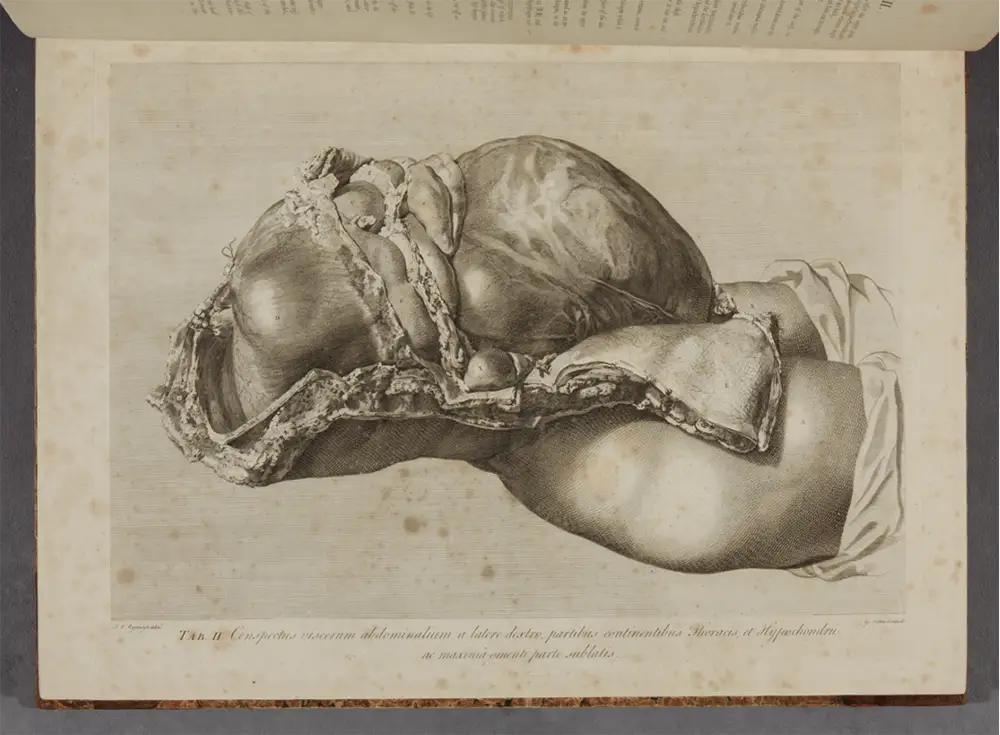
This paper considers the act of dissection as a form of sculptural practice in the work of William Hunter. A physician, anatomist, and anatomy teacher, Hunter is best known for his pioneering and controversial obstetrical atlas, The Anatomy of the Human Gravid Uterus, Exhibited in Figures (1774). To make his book, Hunter deployed a range of material techniques—including cutting, carving, folding, filling, and fragmenting—to reveal and describe, in a radically new way, the pregnant body and the bodies it contained.
Image: Louis Gérard Scotin after Jan van Rymsdyk, Plate II in William Hunter, The Anatomy of the Human Gravid Uterus, Exhibited in Figures (London, 1774). Engraving on paper, 44 x 58.9 cm. Harvey Cushing/John Hay Whitney Medical Library, Yale University.
2:30 – 3:30 PM
Elyse Nelson, “‘Little Floral Souls’: Sculptural Propagation in Rodin’s Studio”
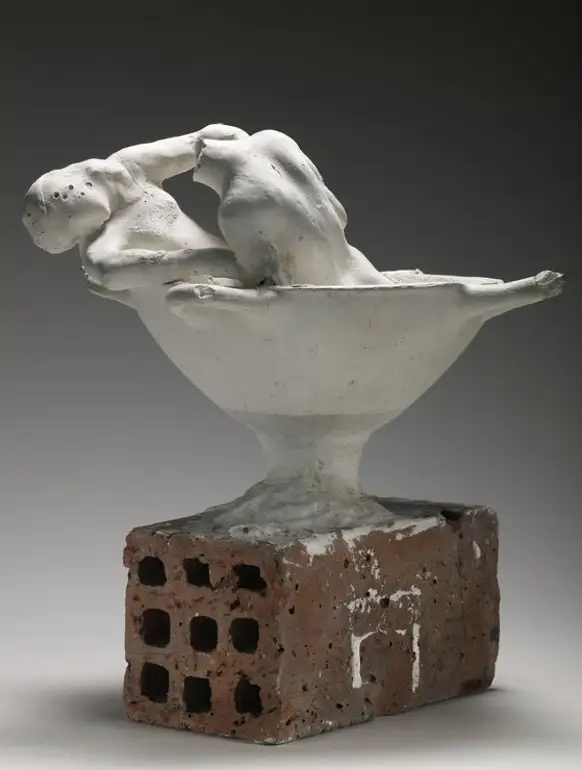
In Rodin’s studio, figures, limbs, and torsos migrated from work to work, grafted and regrown, through a practice his contemporaries knew by the botanical term marcottage. Focusing on the late assemblages of figures set into antique vessels that Rilke called his “little floral souls,” this paper examines how these flowerings—literal budding bodies potted in ancient urns—lay bare the generative system of his art, in which sculpture was understood not as finished object but in a state of perpetual growth. It asks, finally, what this vegetal imagination accomplished for Rodin, as a studio dependent on many bodies and many hands came to be figured as a single organism.
Image: Auguste Rodin, Flowers in a Vase, 1908 Musée Rodin
3:30 – 3:45 PM
Break
3:45 – 4:45 PM
Juliet Bellow, "Sculpting the Ephemeral"
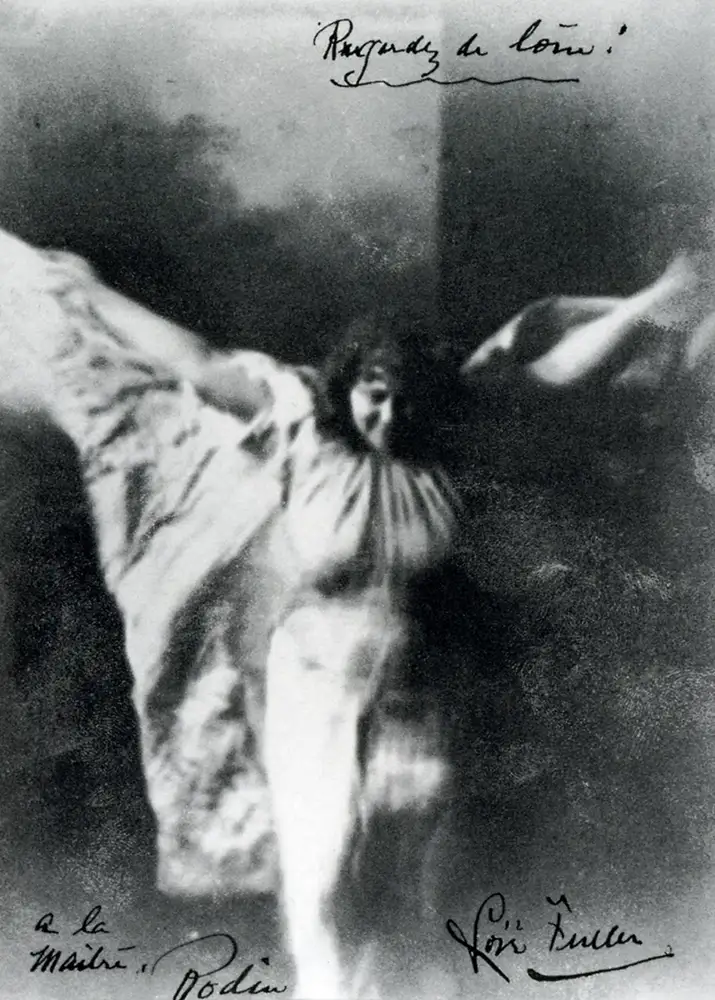
In an 1893 review of her sculpture La Valse, the critic Octave Mirbeau claimed that Camille Claudel had “boldly tackled what is perhaps the most difficult thing for sculpture to render: a dance movement.” This talk explores how and why dance came to be seen as sculpture’s “most difficult thing” as sculptors aimed to make this famously “boring” art more responsive to modernity. In turn, it considers why dancers were drawn to sculpture to make their ephemeral performances durable. It examines this convergence by focusing on a sculpture that was never made: a depiction by Auguste Rodin of the dancer/choreographer Loïe Fuller. In the lead up to the 1900 Exposition Universelle, Fuller made a concerted effort to partner with Rodin on a sculpture that she hoped to display in her pavilion. While Rodin seems to have recognized correspondences between her dance and his sculptural aesthetic, he did not agree to sculpt her likeness. Nevertheless, the impact of Fuller’s ethereal performances on Rodin’s art was visible in the retrospective exhibition he staged in 1900— particularly in his Gates of Hell, which made its dramatic first public appearance there.
Image: Attributed to René Moreau, Loïe Fuller, c. 1900. Photograph. Musée Rodin, Paris, Ph.1537
4:45 – 5:00 PM
Closing conversation
5:00 – 6:00 PM
Break
6:00 PM
Keynote —Mark Antliff, “Sculpting Prefiguration: Henri Bergson, Affinity, and the Insurrectionary Avant-Garde.”
Read more about the Keynote lecture, which is open to the public.
*The Institute of Fine Arts provides reasonable accommodations to people with disabilities. Requests for accommodations for events should be made at least two weeks before the date event. Please email ifa.events@nyu.edu for assistance.
As a participant in our public programs, we ask that you review and abide by the Institute's Community Standards Policy which provides for a positive and educational experience for all of our guests.